Hard water stains on windows can be frustrating. Those cloudy white spots can make perfectly clean glass look dirty, especially after washing your windows or when sprinklers spray water onto them. These stains are not ordinary dirt. They are mineral deposits, usually made up of calcium and magnesium, that remain behind when hard water dries on the glass. Over time, these minerals can build up and become difficult to remove with regular window cleaner.
If you are wondering how to remove hard water stains from windows, the good news is that you do not always need expensive cleaning products or professional services. A few simple household ingredients, including white vinegar and baking soda, can help remove many types of hard water spots from glass.
With a little patience and the right cleaning method, you can make your windows look clear and spotless again. Let’s get started!
Why Do Hard Water Stains Appear on Windows?
Before learning how to clean hard water stains from glass, it helps to understand what causes them. Hard water contains naturally occurring minerals, including calcium and magnesium. When water lands on your windows and dries, these minerals remain on the glass.
Over time, repeated exposure to hard water can create cloudy white spots, streaks, and even thick mineral buildup. You may notice hard water stains on windows after:
- Washing your windows with tap water
- Sprinklers spraying against the glass
- Rainwater drying on your windows
- Washing your car near your home
- Living in an area with hard water
Regular glass cleaners are often not enough to remove these stains. They are designed mainly to remove fingerprints, dust, grease, and everyday dirt. Hard water stains are different because they are caused by mineral deposits. To remove them effectively, you need a cleaning solution that can help break down those minerals.
I remember the first time I tried cleaning a bathroom window covered in hard water spots. I used almost an entire bottle of regular glass cleaner, but the stains barely moved. It was frustrating!
That was when I learned that white vinegar can be much more effective for removing mineral deposits from glass. The acidity in vinegar helps break down the minerals, making the stains easier to wipe away.
What You Need to Remove Hard Water Stains

Cleaning supplies for removing water stains You do not need a long list of expensive supplies to remove hard water stains from windows. Here is what you will need:
- White vinegar
- Distilled water
- A clean spray bottle
- Microfiber cloths
- A soft sponge
- Baking soda for stubborn stains
- Lemon juice for an alternative cleaning method
- A plastic scraper, if necessary
White vinegar is one of the most useful household ingredients for dealing with mineral deposits. Distilled water is also helpful because it contains very few minerals. This means it is less likely to leave additional water spots on your glass.
I also recommend using microfiber cloths. They are soft, absorbent, and less likely to leave lint behind compared with paper towels. For particularly stubborn hard water stains, baking soda can provide additional cleaning power. A plastic scraper may also help with thick deposits, but you should always use caution to avoid scratching the glass.
Avoid using metal scrapers unless they are specifically designed for glass and you know how to use them safely. Most of these supplies are inexpensive and easy to find. I like to keep everything in a small cleaning bucket so I can easily move from one window to another.
How to Make a Vinegar Cleaning Solution
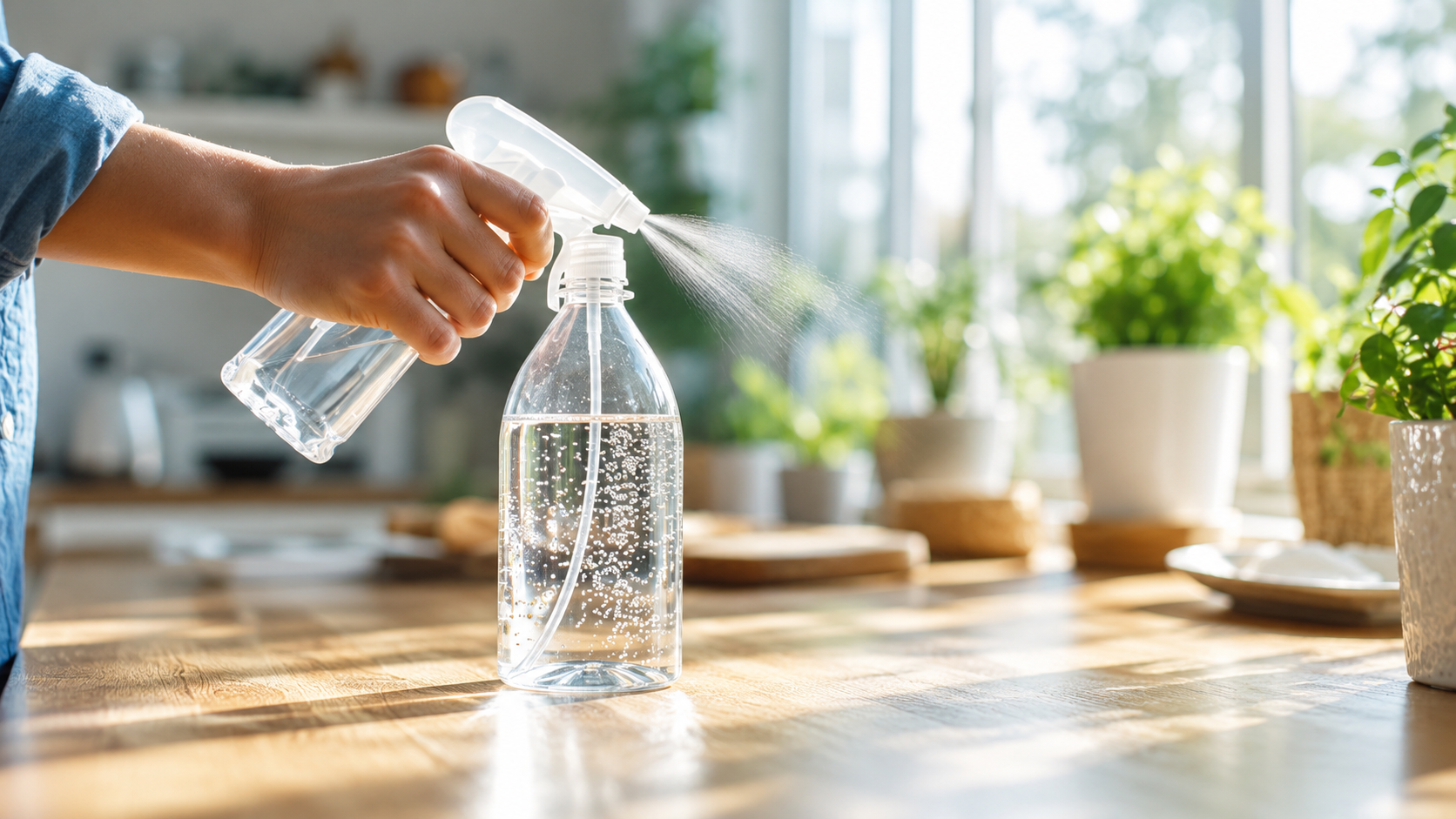
Mixing vinegar and water in a spray bottle One of the easiest ways to make a homemade hard water stain remover for windows is to use white vinegar and distilled water.
I usually mix:
- 1 cup of white vinegar
- 1 cup of distilled water
Pour both ingredients into a clean spray bottle and gently shake to combine. If you want the solution to stay on the glass a little longer, you can add a very small amount of dish soap. Be careful not to add too much because excess soap can leave streaks behind.
If you do not like the smell of vinegar, you can add a little lemon juice for a fresher scent. I once tried using pure vinegar because I thought a stronger solution would work faster. The smell was extremely strong, and it dried too quickly on the glass.
For most windows, a 50/50 mixture of vinegar and distilled water is a good starting point. It can help loosen mineral deposits without making the cleaning process unnecessarily complicated. When cleaning, avoid allowing the vinegar solution to sit on delicate wooden window frames for too long. Keep a dry cloth nearby to wipe up any drips.
Why Vinegar Works on Hard Water Spots
White vinegar contains acetic acid, which helps break down the mineral deposits left behind by hard water. This is why vinegar can be useful when cleaning mineral deposits from glass.
Here is what each ingredient does:
- White Vinegar: The acetic acid helps dissolve and loosen calcium and other mineral deposits.
- Distilled Water: Since it contains very few minerals, it helps reduce the chance of leaving additional water spots.
- Microfiber Cloths: These cloths help lift dirt and residue from the glass without leaving much lint behind.
Together, these simple supplies can make an effective homemade solution for many common hard water stains.
How to Remove Hard Water Stains From Windows Step by Step
Spraying a window with cleaning solution Now that you have your supplies ready, it is time to start cleaning.
Step 1: Remove Loose Dirt
Start by wiping the window with a dry microfiber cloth. Remove dust, dirt, and loose debris before applying your cleaning solution. This helps prevent the dirt from turning into muddy streaks on the glass.
Step 2: Spray the Vinegar Solution
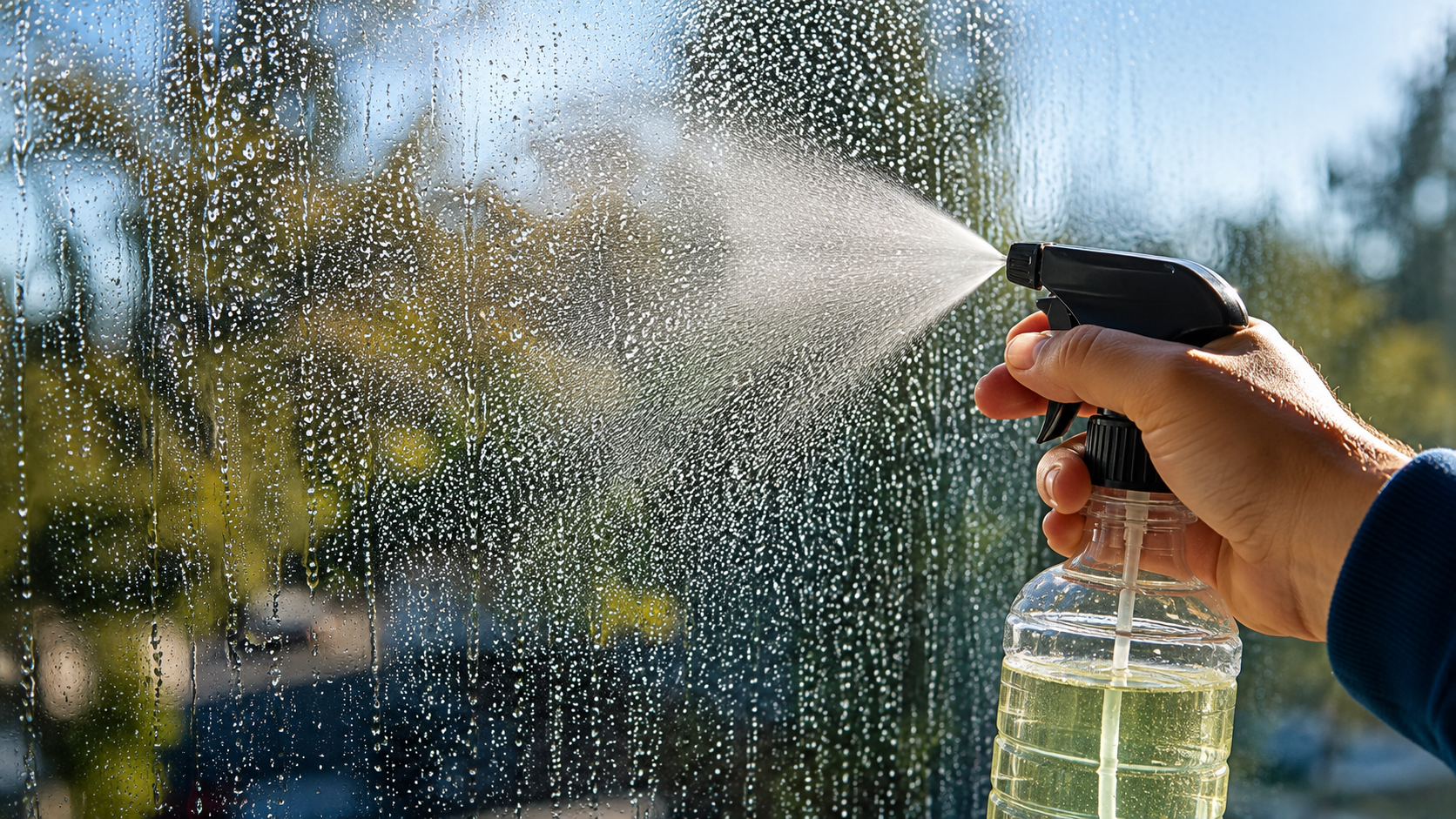
Spray your vinegar and distilled water solution generously over the affected areas. Make sure the hard water stains are completely covered.
Step 3: Let the Solution Sit
Allow the solution to sit for about three to five minutes. Do not let it dry completely on the glass. The goal is to give the vinegar enough time to soften the mineral deposits.
Step 4: Gently Scrub the Glass
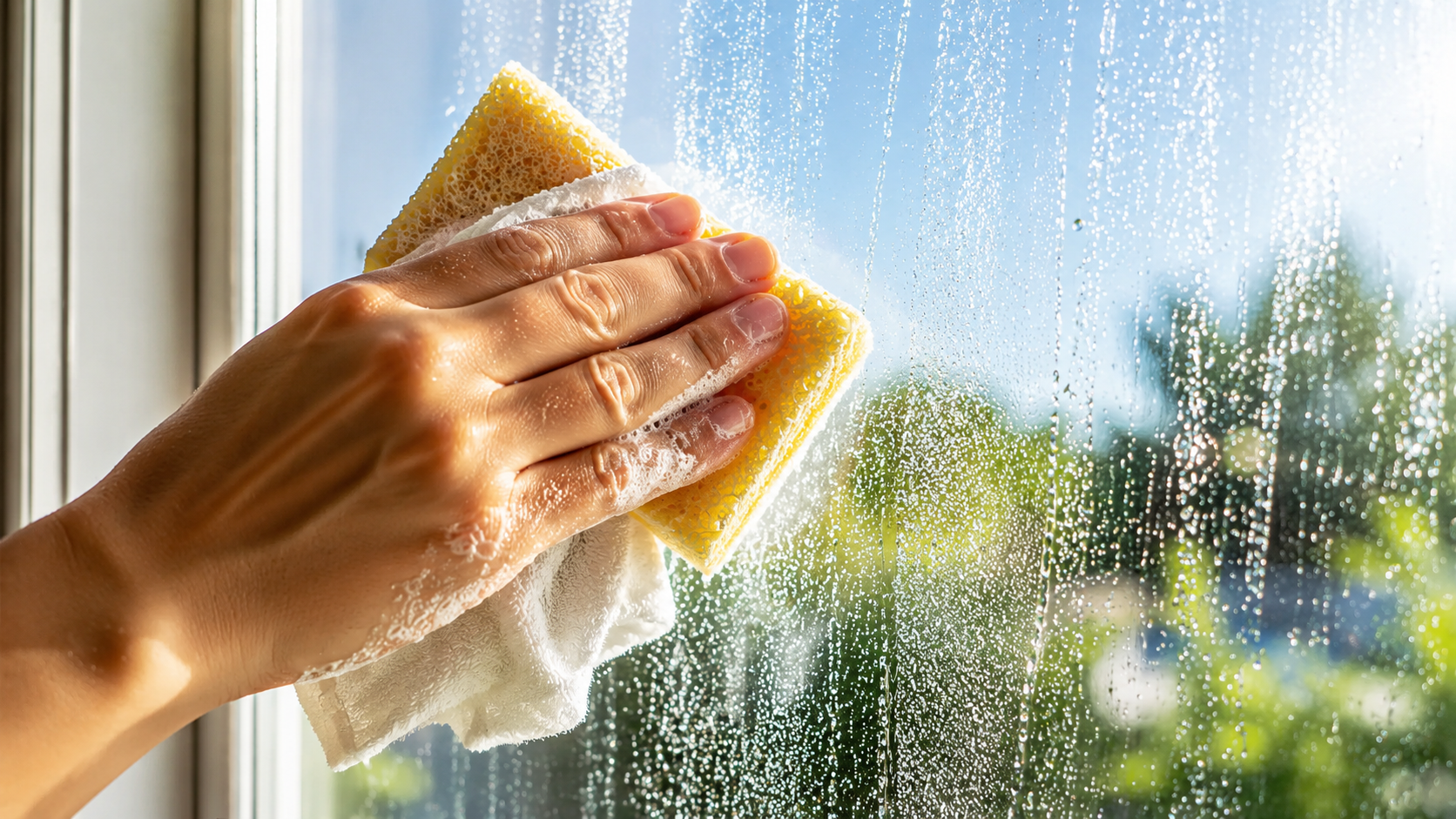
Use a clean microfiber cloth or soft sponge to gently scrub the glass. Work in small circular motions, paying extra attention to areas with visible mineral buildup. You may need to apply some pressure, but avoid using anything abrasive that could scratch the surface.
Step 5: Rinse the Window
Rinse the glass with a small amount of clean distilled water. This helps remove the loosened mineral deposits and any remaining cleaning solution.
Step 6: Dry the Glass
Use a fresh, dry microfiber cloth to dry the window immediately. Drying the glass quickly helps prevent new water spots and streaks from forming.
If the stains are still visible, repeat the process. Some hard water stains have been building up for months or even years, so they may require two or three cleaning attempts.
I usually clean one window at a time. This gives me enough time to scrub the glass before the solution dries. If you are cleaning windows on a hot or sunny day, try working in the shade or during a cooler part of the day. Direct sunlight can cause the solution to dry too quickly.
How to Remove Stubborn Mineral Deposits From Glass
Applying baking soda paste to a window stain Sometimes vinegar alone is not enough to remove stubborn hard water stains from glass. If your windows have thick white mineral buildup, you can try making a simple baking soda paste.
Mix a small amount of baking soda with water until it forms a toothpaste-like consistency. Apply a small amount of the paste to the affected area. Then gently rub it with a soft, damp sponge.
Baking soda has a mild abrasive texture that can help loosen stubborn residue. However, you should still be gentle while scrubbing. Do not use excessive force or harsh abrasive materials on your windows.
After cleaning, rinse the glass thoroughly with clean water. This step is important because leftover baking soda can leave a white film behind, which may make your windows look cloudy.
I find this method particularly useful for windows located near sprinkler heads. These windows often experience heavy mineral buildup because they are repeatedly exposed to water. If the stains are severe, you may need to repeat the process rather than trying to remove everything in one attempt.
Is Baking Soda Safe for Cleaning Glass?
Baking soda can be useful for cleaning stubborn residue, but it should be used carefully. Because baking soda is mildly abrasive, aggressive scrubbing may potentially scratch certain glass surfaces, especially if dirt or grit is trapped between the cleaning material and the glass.
For this reason, always use a soft sponge or microfiber cloth and gentle pressure. If you are unsure about the type of glass you have, test your cleaning method on a small, less noticeable area first. For ordinary hard water stains, it is usually best to start with the vinegar and water solution before trying a more abrasive method.
Using Lemon Juice to Remove Water Spots
Cleaning a window with a fresh lemon If you are looking for another natural way to remove water spots from glass, lemon juice may be worth trying. Lemons contain citric acid, which can help loosen mineral deposits.
For small spots, cut a lemon in half and gently rub the cut side over the affected area. The lemon juice can help soften the mineral buildup while leaving behind a fresh scent. This method is best suited for small areas rather than windows covered in heavy mineral deposits.
After applying the lemon juice, allow it to sit for about a minute. Then wipe the glass with a damp microfiber cloth. Make sure you rinse the glass thoroughly afterward. Lemon juice can leave behind a sticky residue if it is not properly removed, and that residue may attract dust. Once you have finished cleaning, dry the window with a clean microfiber cloth to prevent streaks.
How to Prevent Hard Water Stains on Windows
Applying water repellent to glass Learning how to remove hard water stains from windows is helpful, but preventing them from coming back is even better. The easiest way to reduce hard water spots is to prevent water from sitting on your windows and drying there.
You can use a suitable glass water-repellent treatment that helps water bead up and roll away instead of remaining on the surface. Think of it as a protective layer for your windows. Once your glass is completely clean, apply the product according to the manufacturer’s instructions.
You should also check your sprinkler system. If your sprinklers regularly spray your windows, adjust the sprinkler heads so they water your lawn and garden instead. This simple change can significantly reduce the amount of mineral-rich water that dries on your glass.
If you wash your windows with a hose, dry them as soon as possible. Do not allow tap water to dry naturally on the glass, especially in direct sunlight. These simple habits can help reduce the frequency of hard water stains and make your windows easier to maintain.
Common Problems When Cleaning Hard Water Stains
Checking a window for streaks Sometimes your windows may not look perfect after cleaning. Here are a few common problems you may encounter.
Why Are My Windows Streaky After Cleaning?
If you notice streaks, your cloth may be too dirty or you may have used too much soap. I always keep several clean microfiber cloths nearby. When one becomes too damp or dirty, I switch to a fresh one. Using too much cleaning solution can also contribute to streaks, so avoid soaking the glass unnecessarily.
Why Do Water Spots Come Back After Cleaning?
You may notice that some stains disappear while the glass is wet but become visible again once it dries. These are sometimes called “ghost spots.” This usually means that mineral buildup is still present on the glass. If this happens, repeat the vinegar treatment and allow the solution to sit for a few minutes before gently scrubbing again.
What If Vinegar Does Not Remove the Stains?
If you have tried cleaning the glass several times and the cloudy appearance remains, the glass may be etched. Etching can occur when mineral deposits remain on the surface for a long time and eventually damage the glass. If the glass still feels rough or looks cloudy after thorough cleaning, the problem may be permanent etching rather than surface dirt.
In that situation, ordinary cleaning methods may not be enough. You may need a specialized glass polishing compound or professional glass restoration. For most everyday hard water stains, however, vinegar and gentle cleaning should make a noticeable difference.
How to Get a Streak-Free Finish
If you want your windows to have a professional, streak-free finish, take a moment to inspect your work from different angles. Walk outside and look at the glass from the side. Natural light can make missed spots and streaks much easier to see.
For large windows, I also recommend using a clean squeegee. A squeegee can remove water and cleaning solution quickly, helping reduce streaks and leaving the glass looking clearer.
Make sure the rubber blade is clean and in good condition. An old or damaged blade can leave lines behind. Wipe the blade with a clean cloth after each stroke to remove excess water and dirt. Finally, do not forget the edges and corners of your windows.
Dirt and mineral deposits often collect where the glass meets the window frame. For tight corners, you can use an old soft toothbrush with a small amount of your vinegar solution. Once everything is clean, step back and enjoy the view.
Clean windows can make a surprising difference in how bright and welcoming a room feels. They allow more natural light into your home and can make the entire space look cleaner. Best of all, you can achieve great results without spending a fortune on professional window cleaning.
Frequently Asked Questions About Hard Water Stains
Can I use steel wool to remove hard water stains from windows?
It is generally best to avoid using steel wool on glass unless it is specifically designed for the type of glass you are cleaning. Using the wrong abrasive material can scratch the surface. Start with a vinegar and water solution instead.
Is Windex good for hard water spots?
Regular glass cleaners can remove fingerprints, dust, grease, and everyday dirt, but they may not be effective against heavy mineral deposits. If you have hard water stains on your windows, you may need an acidic cleaning solution, such as diluted white vinegar, to help break down the mineral buildup.
Why do my windows get hard water spots so quickly?
Your windows may be exposed to hard water from sprinklers, rain, or frequent washing. When mineral-rich water repeatedly dries on the glass, new spots can develop quickly. Sprinklers that spray directly onto your windows are a particularly common cause of hard water stains.
Can I use apple cider vinegar instead of white vinegar?
White vinegar is usually the better option for cleaning windows because it is clear, inexpensive, and less likely to leave behind color or residue.
How often should I clean my windows?
The ideal cleaning schedule depends on your home and environment. If your windows are regularly exposed to sprinklers, rain, dust, or hard water, you may need to clean them more often. For many homes, a thorough cleaning once or twice a year, combined with regular maintenance, can help keep windows looking clear.
Clear Glass Is Finally Yours
Now you know how to remove hard water stains from windows using simple cleaning methods and affordable household supplies. Start with a mixture of white vinegar and distilled water. For more stubborn mineral deposits, you can carefully try a baking soda paste or lemon juice.
Remember to rinse the glass thoroughly and dry it immediately after cleaning. This can help prevent new water spots and streaks. Most importantly, try to prevent hard water from repeatedly drying on your windows. Adjust your sprinklers, dry your glass after washing, and consider using a suitable water-repellent treatment.
With a little patience and regular maintenance, you can keep your windows looking clean, clear, and bright without spending a fortune on professional cleaning services. Your windows do not have to stay cloudy and covered in white spots. With the right method, you can bring back that clean, clear look and enjoy more natural light in your home. Happy cleaning!