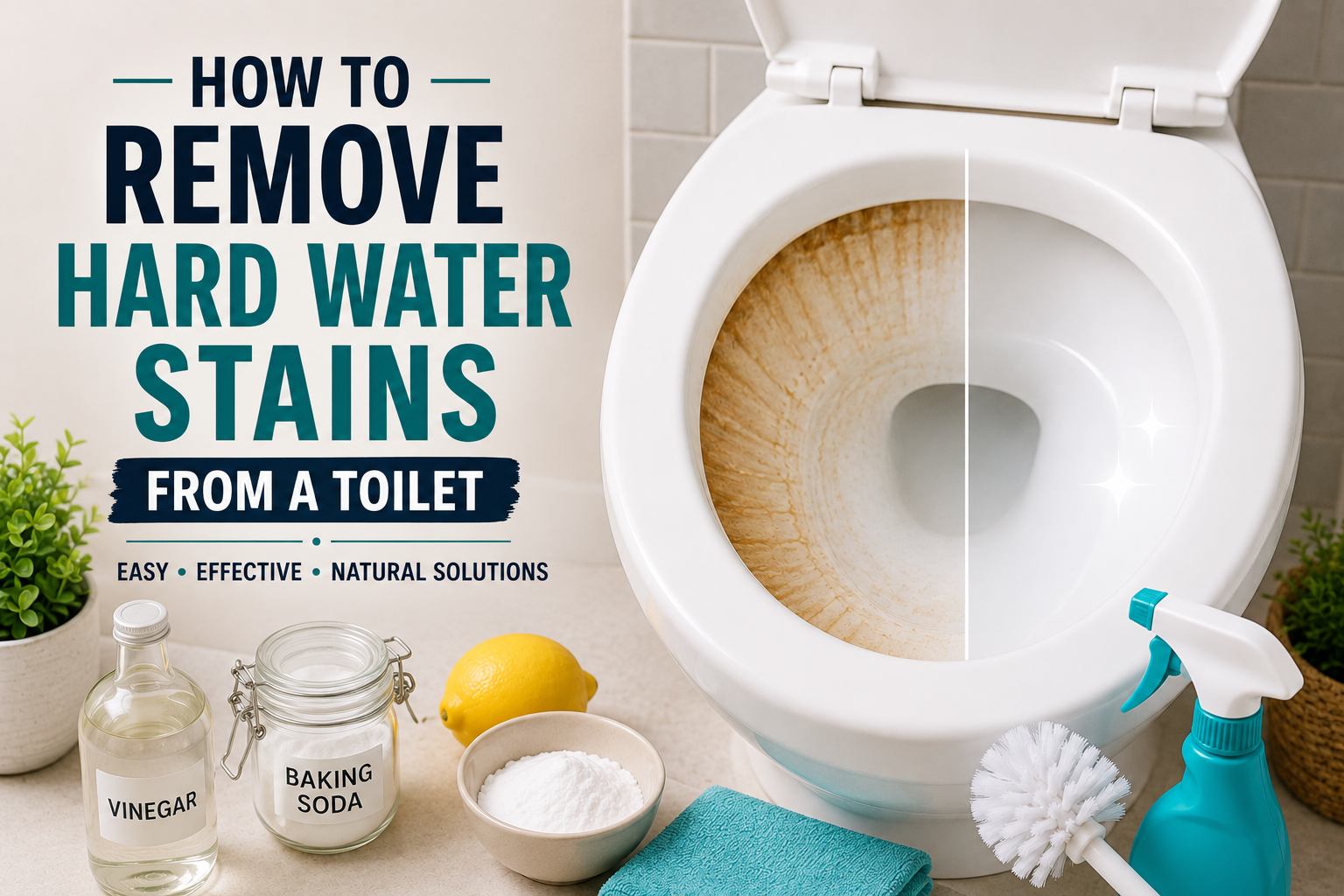
Knowing how to remove hard water stains from a toilet can help keep your bathroom looking clean and fresh. Hard water stains often appear as brown, orange, white, or chalky rings inside the toilet bowl. These stains develop when minerals such as calcium, magnesium, and iron are left behind after the water evaporates.
The longer these mineral deposits remain, the harder they become to remove. Fortunately, you don’t always need expensive cleaners. Many hard water stains can be removed using common household ingredients such as vinegar, baking soda, Borax, or a pumice stone.
If you’re dealing with mineral buildup throughout your home, be sure to read our Complete Guide on How to Get Rid of Hard Water Stains for more cleaning methods and prevention tips.
Why Hard Water Stains Form in Toilets
Hard water contains dissolved minerals that remain behind after the water evaporates. Every time the toilet is flushed, small amounts of these minerals stick to the inside of the bowl. Over weeks and months, the deposits harden and create visible stains, especially around the waterline and near the drain opening. The severity of the stains depends on how hard your water is and how often the toilet is cleaned. Regular maintenance helps prevent mineral deposits from becoming permanent.
The Effects of Hard Water Stains in Toilets
Hard water stains are more than just a cosmetic issue. Thick mineral deposits can trap bacteria, make cleaning more difficult, and leave unpleasant discoloration inside the toilet bowl. Heavy buildup may also reduce the effectiveness of some toilet cleaners because they cannot easily penetrate hardened deposits.
Removing stains regularly helps keep your bathroom cleaner while extending the life of your toilet’s finish.
Effective Ways on How to Remove Hard Water Stains from a Toilet
Now that you understand what causes hard water stains, let’s look at the best ways to remove them safely and effectively.
1. Use White Vinegar
White vinegar is one of the most effective natural cleaners for removing toilet hard water stains. Its acidity helps dissolve calcium and lime deposits without damaging porcelain.
Pour two to three cups of white vinegar into the toilet bowl, making sure it covers the stained areas. Let it sit for at least 30 minutes or overnight for stubborn stains. Scrub the bowl thoroughly using a toilet brush before flushing. For heavy buildup, repeat the process until the stains disappear.

Helpful tips:
- Warm vinegar can work faster on stubborn stains.
- Allow the vinegar to soak overnight for the best results.
- Clean the toilet weekly to prevent future buildup.
2. Scrub With Baking Soda
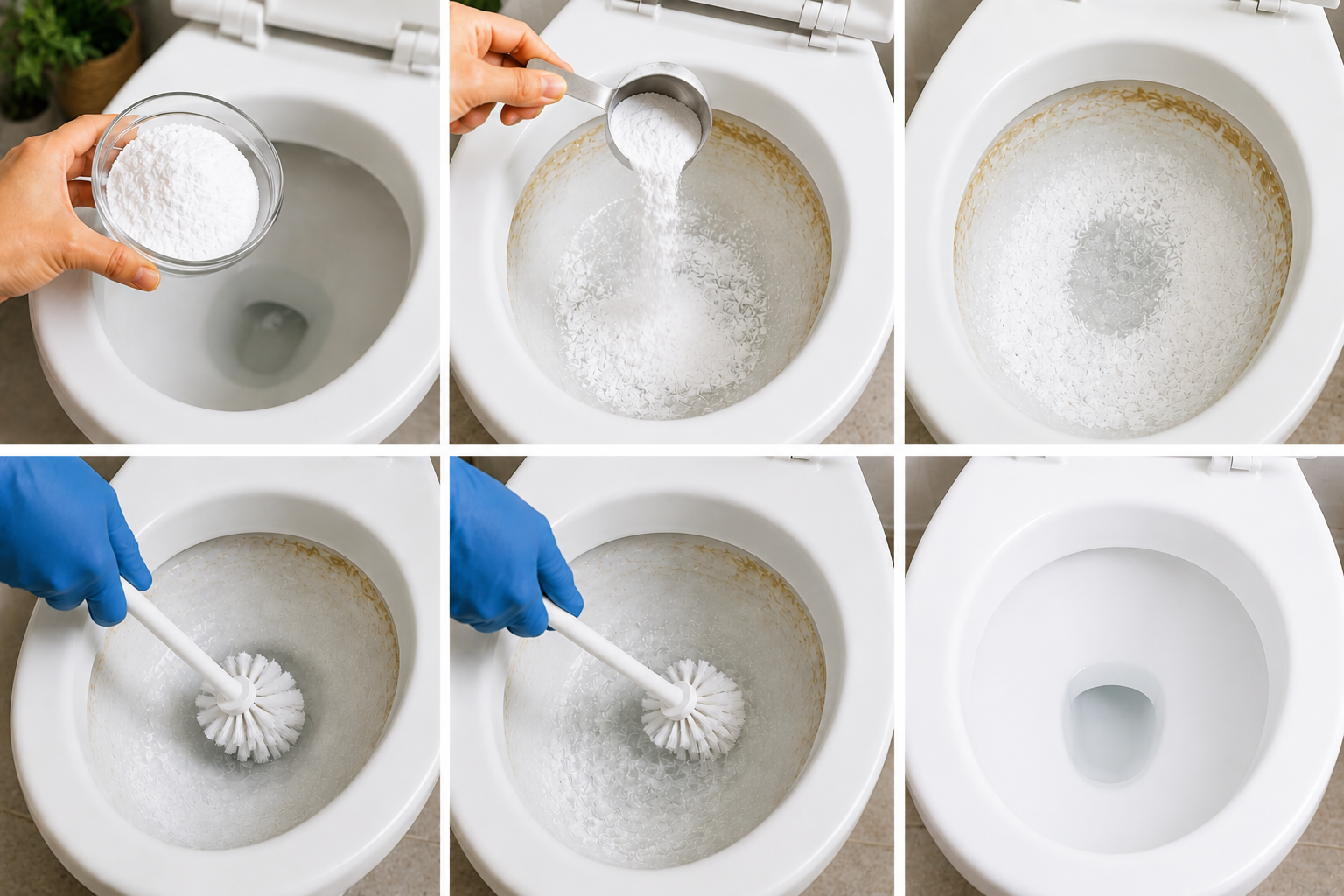
Baking soda provides gentle scrubbing power that helps loosen mineral deposits while deodorizing the toilet. Sprinkle one cup of baking soda around the inside of the toilet bowl after adding vinegar or water. Leave it for about 15 minutes before scrubbing with a toilet brush. The mild abrasive action helps remove stains without scratching the porcelain surface. Flush the toilet once you’re finished cleaning.
Helpful tips:
- Combine baking soda with vinegar for stronger cleaning action.
- Focus on stained areas around the waterline.
- Use a quality toilet brush with firm bristles.
3. Clean With Lemon Juice
Lemon juice is another natural option for removing light hard water stains. The natural citric acid helps dissolve mineral deposits while leaving behind a fresh scent. Pour fresh lemon juice directly onto stained areas and allow it to sit for about 20 minutes. Scrub thoroughly with a toilet brush before flushing. This method works best for newer or lighter stains.

Helpful tips:
- Fresh lemons provide better results than bottled juice.
- Repeat the process for stubborn stains.
- Wipe the toilet seat and exterior with leftover lemon juice for extra freshness.
4. Use a Pumice Stone
A pumice stone is highly effective for removing stubborn hard water stains that don’t respond to regular cleaners. When used correctly, it safely removes mineral deposits from porcelain without causing damage.
Before using the stone, wet both the toilet bowl and the pumice stone. Gently rub the stained areas until the buildup begins to disappear. Continue adding water while cleaning to prevent scratching. Avoid using excessive pressure during the process.

Helpful tips:
- Always keep the pumice stone wet.
- Use gentle pressure while scrubbing.
- Only use pumice stones designed for toilet cleaning.
5. Try Commercial Toilet Cleaners
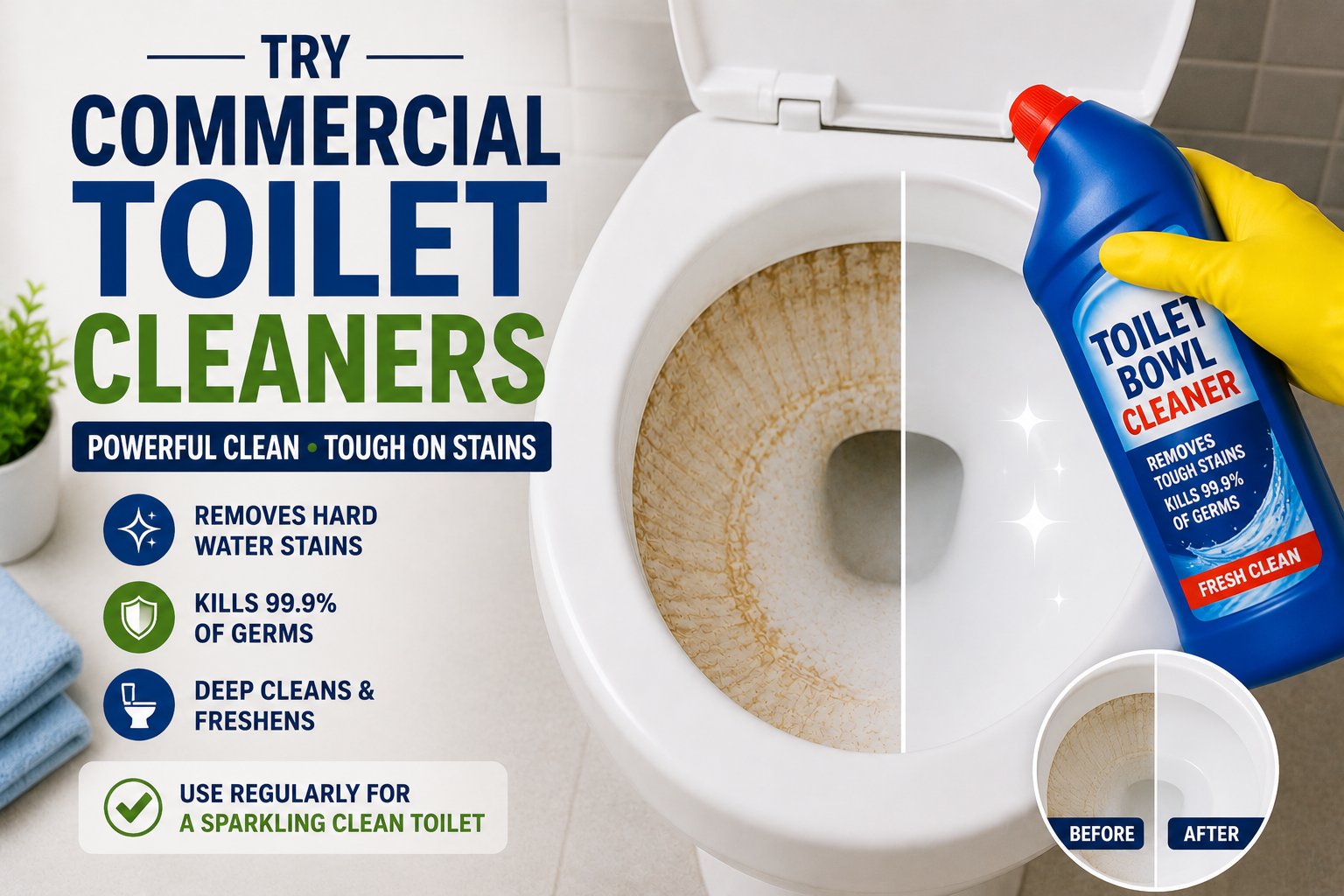
If natural methods don’t remove the stains completely, a commercial toilet cleaner formulated for hard water deposits may be necessary. Apply the cleaner according to the manufacturer’s instructions and allow it to sit for the recommended amount of time. Scrub thoroughly with a toilet brush before flushing. Many commercial cleaners contain ingredients specifically designed to dissolve calcium, lime, and rust stains quickly.
Helpful tips:
- Wear gloves when using chemical cleaners.
- Keep the bathroom well ventilated.
- Never mix bleach with acidic cleaners.
6. Remove Heavy Mineral Deposits
For toilets with years of hard water buildup, multiple cleaning sessions may be required. Start by using vinegar overnight, followed by baking soda and scrubbing the next day. If stains remain, use a pumice stone or commercial cleaner to remove the remaining deposits. Patience is important because thick mineral buildup often dissolves gradually rather than all at once.
Helpful tips:
- Don’t rush the soaking process.
- Repeat treatments instead of using excessive force.
- Clean regularly once the stains are removed.
7. Prevent Hard Water Stains From Returning
Preventing hard water stains is much easier than removing them. Clean your toilet every week using vinegar or a toilet cleaner to stop mineral deposits from building up. Brushing the bowl regularly also prevents stains from hardening.
If your home has very hard water, installing a water softener can significantly reduce mineral buildup throughout your plumbing system, including your toilets. Simple maintenance goes a long way toward keeping your toilet clean and stain-free.
Helpful tips:
- Brush the toilet bowl at least once a week.
- Flush regularly if the toilet isn’t used often.
- Consider installing a water softener for long-term protection.
FAQs
What causes brown stains in a toilet bowl?
Brown stains are usually caused by iron, calcium, magnesium, and other minerals found in hard water. Over time, these minerals build up and create stubborn discoloration.
Can vinegar remove toilet hard water stains?
Yes. White vinegar is one of the most effective natural cleaners for dissolving hard water stains. Allowing it to soak for several hours or overnight provides the best results.
Is it safe to use a pumice stone on a toilet?
Yes. A pumice stone is safe for porcelain toilets when both the stone and the toilet surface remain wet during cleaning. Avoid using it on plastic or other delicate materials.
How often should I clean my toilet to prevent hard water stains?
Cleaning your toilet once a week helps prevent mineral deposits from building up. Homes with very hard water may benefit from more frequent cleaning.
Can a water softener prevent toilet stains?
Yes. A water softener reduces the amount of calcium and magnesium in your water supply, helping prevent hard water stains from forming inside the toilet bowl.
Conclusion
Hard water stains can make even a clean toilet look unpleasant, but they don’t have to be permanent. Natural solutions like white vinegar, baking soda, and lemon juice can remove most stains, while pumice stones and commercial cleaners are excellent options for tougher mineral deposits.
The key to keeping your toilet spotless is regular maintenance. Cleaning the bowl weekly, removing stains as soon as they appear, and reducing the mineral content in your water can prevent future buildup. With these simple methods, your toilet can stay clean, fresh, and free from stubborn hard water stains.