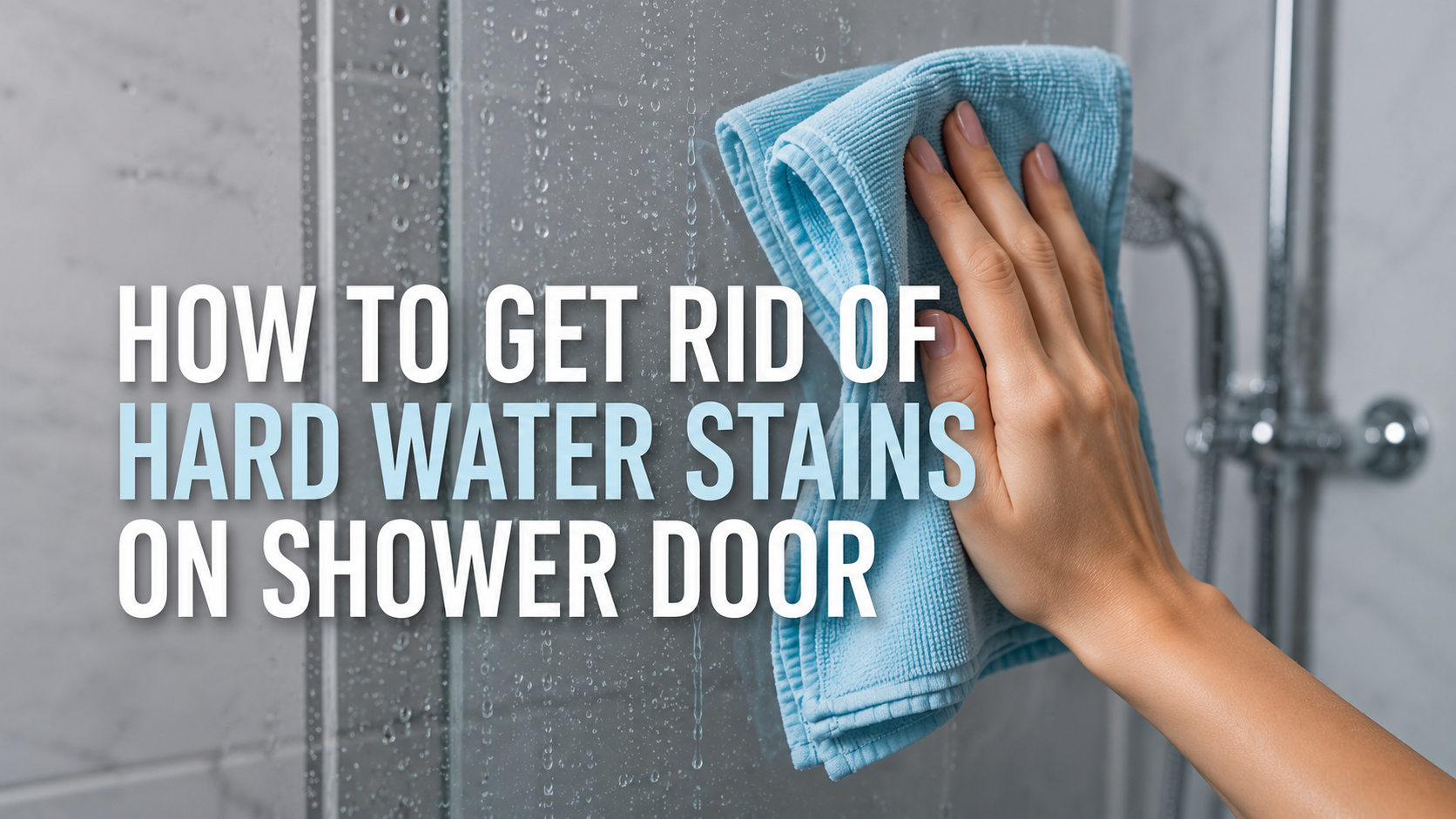
How to remove hard water stains from shower doors is a common question for homeowners dealing with cloudy glass and stubborn mineral buildup. Hard water stains on shower doors are one of the most common bathroom cleaning problems. Over time, minerals like calcium and magnesium build up on the glass every time water dries, leaving behind cloudy spots, white streaks, and stubborn residue. These stains can make your shower doors look dirty even after you’ve cleaned the bathroom.
The good news is that hard water stains can be removed with simple household ingredients or commercial cleaning products. With the right cleaning methods and regular maintenance, you can restore your shower doors to a crystal-clear finish. In this guide, you’ll learn the best ways to remove hard water stains from shower doors and prevent them from coming back.
If you’re dealing with hard water stains throughout your home, read our complete guide on How to Get Rid of Hard Water Stains.
What Causes Hard Water Stains on Shower Doors?
Hard water contains dissolved minerals that remain on the glass after the water evaporates. Each shower leaves behind a thin layer of mineral deposits. Eventually, these deposits build up into stubborn white or cloudy stains.
Common causes include:
- Hard water supply
- Soap scum mixing with minerals
- Poor bathroom ventilation
- Not wiping the glass after showering
- Infrequent cleaning
The Effects of Hard Water Stains
Hard water stains don’t just affect the appearance of your shower doors. Heavy mineral buildup can reduce the transparency of the glass, making your bathroom look older and less clean. Thick deposits can also become more difficult to remove the longer they remain on the surface.
Keeping shower doors clean helps maintain their shine while preventing stubborn buildup that requires more effort to remove.
How to Remove Hard Water Stains from Shower Doors
Now that you understand why hard water stains develop, let’s explore the most effective methods for cleaning shower doors.
1. Use White Vinegar For a Natural Clean
White vinegar is one of the most effective natural cleaners for removing hard water stains from glass. Its acidity breaks down mineral deposits without damaging most shower doors.
Fill a spray bottle with white vinegar and spray it generously over the stained glass. Allow it to sit for 15 to 20 minutes before wiping the surface with a soft sponge or microfiber cloth. Rinse with warm water and dry the glass completely. For stubborn stains, repeat the process or allow the vinegar to soak longer.

Helpful tips:
- Warm vinegar can improve cleaning results.
- Dry the glass after rinsing to prevent streaks.
- Avoid using vinegar on natural stone surrounding the shower.
2. Try Baking Soda for Stubborn Spots
Baking soda helps remove stubborn hard water stains by gently scrubbing away mineral deposits. Mix baking soda with a small amount of water until it forms a thick paste. Apply the paste to stained areas and let it sit for about 10 to 15 minutes. Gently scrub using a soft sponge before rinsing thoroughly with clean water. This method works well for areas with heavy buildup.

Helpful tips:
- Use a non-abrasive sponge for cleaning.
- Rinse away all baking soda residue.
- Repeat if stains remain after the first application.
3. Use Lemon Juice to Remove Stains
Lemon juice is another natural solution that works well on hard water stains. The citric acid helps dissolve mineral deposits while leaving your shower smelling fresh. Cut a lemon in half and rub it directly over the stained glass. Leave the juice on the surface for several minutes before wiping it away with a damp microfiber cloth. Finish by drying the glass to prevent water spots. This method is ideal for light to moderate stains.

Helpful tips:
- Fresh lemons provide the best results.
- Dry the glass immediately after cleaning.
- Avoid using lemon juice on marble or granite surfaces.
4. Try Commercial Glass Cleaners to Remove Hard Water Stains
If natural cleaning methods don’t completely remove the stains, a commercial hard water stain remover or glass cleaner may be necessary. Apply the cleaner according to the manufacturer’s instructions and allow it to sit for the recommended time. Wipe the surface with a soft cloth or sponge before rinsing thoroughly with water. Always use products designed specifically for glass surfaces.

Helpful tips:
- Wear gloves when using chemical cleaners.
- Ensure the bathroom is well ventilated.
- Test the cleaner on a small area first.
5. Use Magic Eraser to Clean Stains
A melamine foam sponge, commonly known as a Magic Eraser, can remove many hard water stains without requiring harsh chemicals.
Wet the sponge with clean water and gently rub the stained areas using light pressure. The foam lifts mineral deposits and soap scum, leaving the glass much clearer. Rinse the shower door afterward and dry it completely.
Helpful tips:
- Avoid scrubbing too aggressively.
- Use only on smooth glass surfaces.
- Replace the sponge when it begins to wear out.
6. Use a Glass Scraper Carefully
For extremely stubborn mineral deposits, a glass scraper with a new razor blade can help remove hardened buildup.
Wet the glass first, then hold the scraper at a slight angle while gently scraping away the deposits. Work slowly to avoid scratching the glass. After removing the buildup, clean the glass with vinegar or a glass cleaner.
Helpful tips:
- Always keep the glass wet while scraping.
- Use a clean, sharp blade.
- Never scrape dry glass.
How to Prevent Hard Water Stains From Returning
The easiest way to keep shower doors clean is to prevent hard water stains from forming. After every shower, use a squeegee to remove water from the glass. Dry any remaining moisture with a microfiber cloth to stop mineral deposits from developing.
You can also spray the glass with a daily shower cleaner to reduce soap scum and hard water buildup. If your home has very hard water, installing a water softener can provide long-term protection. Simple daily habits make future cleaning much easier.
Helpful tips:
- Use a squeegee after every shower.
- Wipe the glass dry with a microfiber cloth.
- Clean shower doors weekly to prevent buildup.
FAQs
What causes cloudy shower doors?
Cloudy shower doors are usually caused by mineral deposits from hard water combined with soap scum. Regular cleaning helps prevent the buildup from becoming permanent.
Does vinegar remove hard water stains from shower doors?
Yes. White vinegar is one of the most effective natural cleaners for dissolving calcium and magnesium deposits on glass shower doors.
Can baking soda scratch shower glass?
No. Baking soda is generally safe for glass because it is only mildly abrasive. Use a soft sponge and avoid excessive pressure while scrubbing.
How often should I clean shower doors?
Cleaning shower doors once a week and wiping them dry after every shower helps prevent hard water stains from forming.
Will a water softener stop hard water stains?
A water softener significantly reduces the minerals that cause hard water stains. While it won’t remove existing deposits, it helps prevent new stains from developing.
For more cleaning tips, check out our How to Get Rid of Hard Water Stains guide or learn How to Remove Hard Water Stains from a Toilet if you’re dealing with bathroom fixtures.
Conclusion
You must have learnt how to remove hard water stains from shower doors at this point and it is easier when you use this right cleaning methods. Natural solutions like white vinegar, baking soda, and lemon juice work well for most stains, while commercial cleaners and glass scrapers can handle more stubborn mineral buildup.
The best way to keep shower doors looking spotless is through regular maintenance. Using a squeegee after each shower, drying the glass, and cleaning it weekly can prevent stains from returning. With these simple habits, your shower doors will stay clear, shiny, and free from hard water stains for years to come.