Knowing how to get rid of hard water stains is essential if you want to keep your bathroom, kitchen, and other surfaces looking clean and spotless. Hard water stains are a common household problem that can make your bathroom and kitchen look dirty even after you’ve cleaned them. These cloudy white spots and chalky deposits are caused by minerals such as calcium and magnesium that remain behind when hard water evaporates. The buildup becomes more noticeable over time and can be difficult to remove if left untreated.
The good news is that hard water stains can be removed using simple household ingredients or specialized cleaning products. With the right cleaning methods and a little regular maintenance, you can restore the shine to your glass, faucets, tiles, and sinks. In this guide, you’ll learn how to get rid of hard water stains using proven methods and discover practical tips to help prevent them from coming back.
Why Hard Water Stains Form
Hard water contains high levels of dissolved minerals, mainly calcium and magnesium. When water dries on a surface, these minerals remain behind and gradually build up into stubborn stains. Areas that are constantly exposed to water, such as shower doors, faucets, sinks, bathtubs, and kitchen countertops, are the most likely places for hard water stains to appear.
If the deposits are not cleaned regularly, they continue to harden and become much more difficult to remove. In some cases, they can even damage certain surfaces or reduce the efficiency of household fixtures and appliances.
The Effects of Hard Water Stains
Hard water stains do more than affect the appearance of your home. Mineral buildup can clog showerheads, reduce water flow, and leave fixtures looking worn out. Appliances like kettles, coffee makers, dishwashers, and washing machines can also develop limescale inside, making them less efficient and shortening their lifespan.
Keeping hard water stains under control not only improves the appearance of your home but also helps protect your plumbing and appliances from unnecessary wear.
How to Get Rid of Hard Water Stains on Different Surfaces
Now that you know what causes hard water stains, let’s look at some of the best methods to remove them from different surfaces around your home.
1. Clean With White Vinegar
White vinegar is one of the most effective natural cleaners for removing hard water stains. Its acidic properties dissolve calcium and mineral deposits without requiring harsh chemicals. To use this method, soak a clean cloth or paper towel in white vinegar and place it over the stained area.
Allow it to sit for about 15 to 20 minutes so the vinegar has enough time to break down the mineral buildup. Remove the cloth and gently scrub the surface using a soft sponge or brush before rinsing with clean water. For stubborn stains, spray vinegar directly onto the surface and let it sit a little longer before scrubbing.

Helpful tips:
- Warm vinegar works even better on stubborn stains.
- Always rinse surfaces thoroughly after cleaning.
- Avoid using vinegar on marble, granite, or other natural stone surfaces.
2. Remove Stains With Baking Soda
Baking soda is another excellent household cleaner that helps remove hard water stains without scratching most surfaces. It acts as a gentle abrasive that lifts stubborn deposits while protecting the finish.
Mix baking soda with a small amount of water to create a thick paste. Spread the paste over the stained area and leave it for 10 to 15 minutes. Gently scrub using a soft sponge or an old toothbrush, then rinse thoroughly with water and dry the surface. This method works especially well on sinks, bathroom tiles, faucets, and stainless steel fixtures.

Helpful tips:
- Make the paste thick enough so it stays on vertical surfaces.
- Use a soft brush instead of metal scrubbers.
- Rinse completely to prevent any powdery residue.
3. Use Lemon Juice
Lemon juice is another natural solution that works well against hard water stains. Like vinegar, it contains natural acids that dissolve mineral deposits while leaving behind a fresh citrus scent.
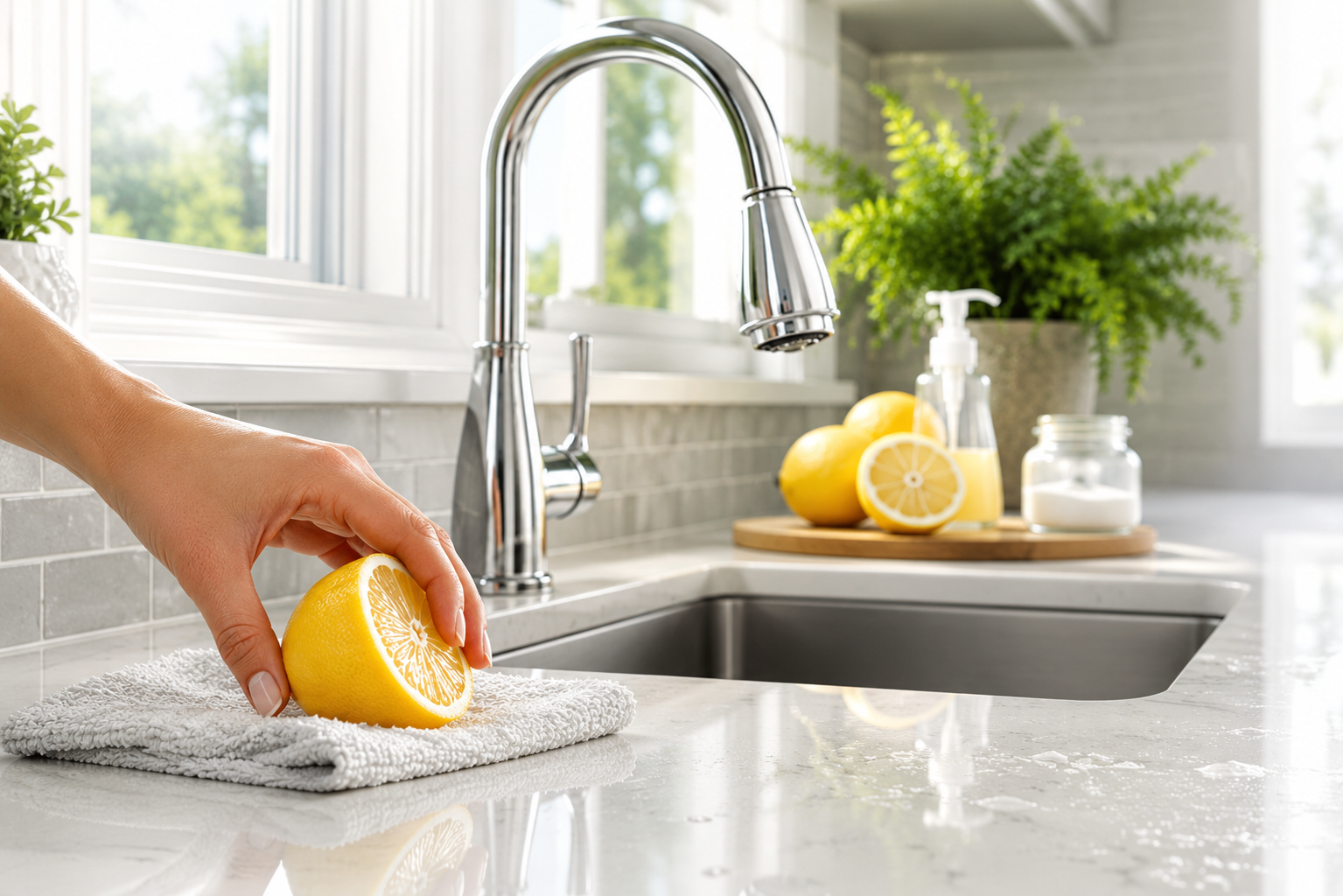
Simply cut a lemon in half and rub it directly over the stained surface. Allow the juice to remain for several minutes before wiping the area clean with a damp cloth. For larger surfaces, squeeze fresh lemon juice into a spray bottle and apply it evenly before cleaning. Lemon juice works particularly well on chrome faucets, showerheads, glass, and stainless steel.
Helpful tips:
- Fresh lemons usually work better than bottled juice.
- Dry the surface after cleaning to prevent new spots.
- Do not use lemon juice on natural stone surfaces.
4. Try Commercial Hard Water Stains Removers
Sometimes natural cleaning solutions may not be enough, especially if mineral deposits have built up over several months or years. In these situations, commercial hard water stain removers can provide faster results.
These products are specially formulated to dissolve heavy calcium and lime deposits. Follow the instructions on the label carefully and wear protective gloves while cleaning. Make sure the room is well ventilated if you’re using strong chemical cleaners indoors. Always choose a cleaner that is suitable for the surface you are treating.

Helpful tips:
- Read the manufacturer’s instructions before use.
- Never mix different chemical cleaners together.
- Test the product on a small hidden area first.
5. Clean Showerheads and Faucets
Showerheads and faucets are some of the most common places where hard water stains develop. Mineral deposits can clog the small holes, reducing water pressure over time.
Fill a plastic bag with white vinegar and secure it around the showerhead or faucet using a rubber band. Leave it to soak for several hours or overnight. Remove the bag, scrub away any remaining buildup with an old toothbrush, then rinse with clean water. This method restores water flow while making fixtures look shiny again.

Helpful tips:
- Clean showerheads every month.
- Use a soft toothbrush for detailed cleaning.
- Wipe fixtures dry after each use.
6. Remove Hard Water Stains From Glass
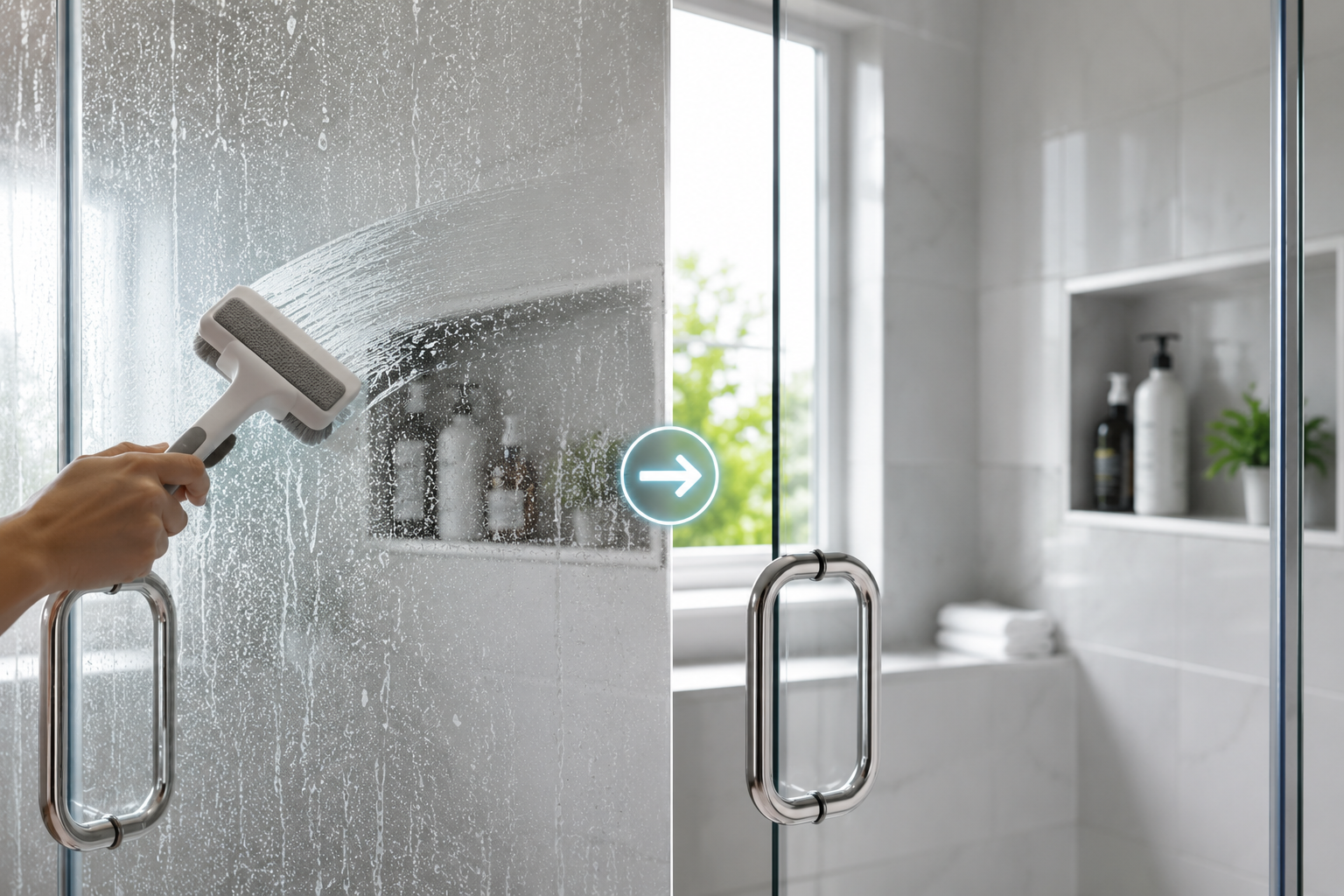
Glass shower doors and windows often develop cloudy white spots from hard water. Fortunately, these stains can usually be removed with a simple cleaning routine.
Spray white vinegar or a commercial glass cleaner onto the glass and allow it to sit for several minutes. Wipe with a microfiber cloth using circular motions until the stains disappear. Finish by drying the glass with a clean cloth to prevent streaks. Regular cleaning helps maintain a crystal-clear finish.
Helpful tips:
- Use a squeegee after every shower.
- Dry glass immediately after cleaning.
- Clean glass weekly to prevent buildup.
7. Prevent Hard Water Stains From Returning
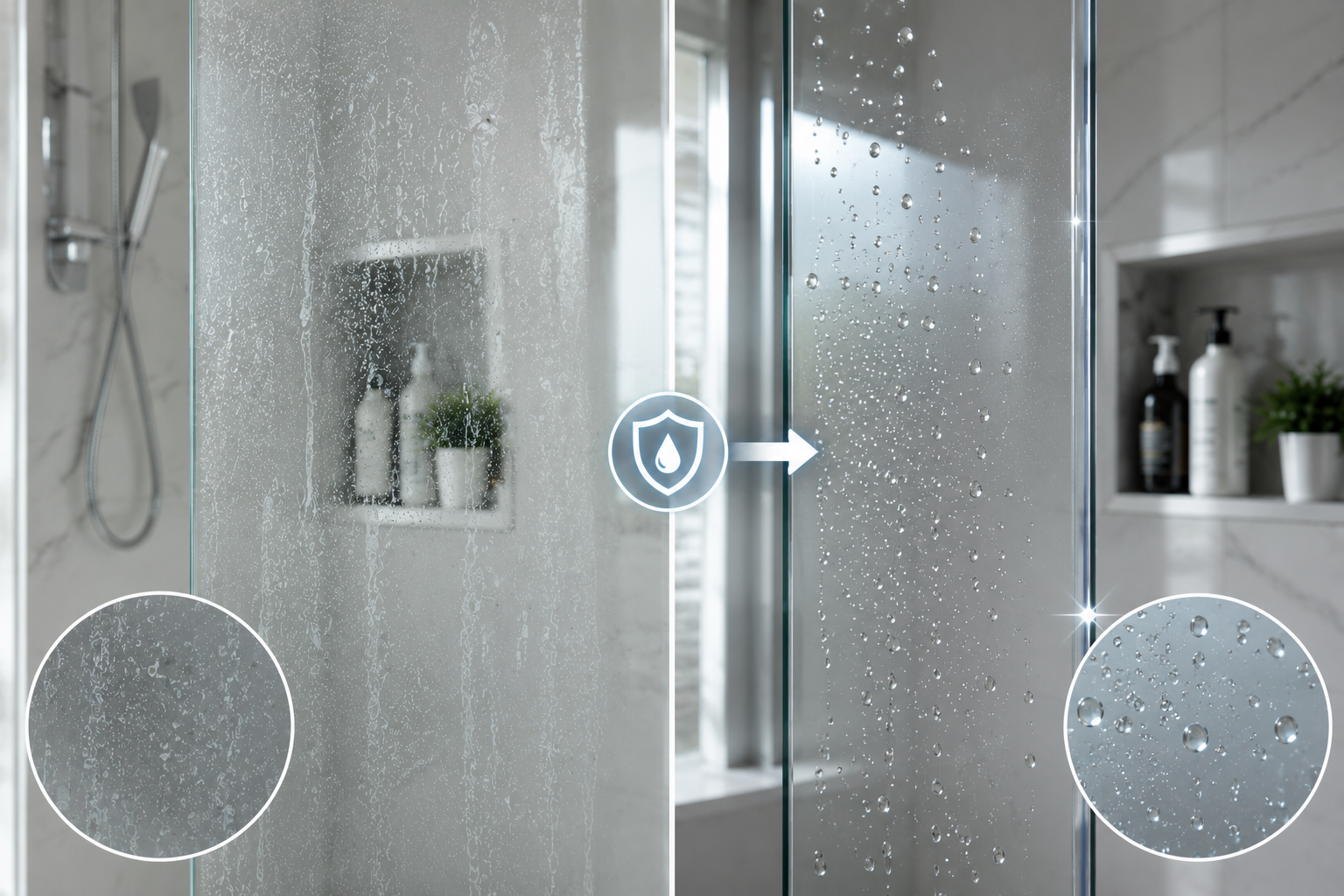
The easiest way to deal with hard water stains is to stop them from forming in the first place. Wipe down wet surfaces after each use, especially shower doors, faucets, and sinks. Removing standing water prevents minerals from drying onto the surface.
Installing a water softener is one of the most effective long-term solutions. It reduces the amount of calcium and magnesium in your home’s water supply, helping prevent stains while protecting your plumbing and appliances. Regular maintenance will save time and reduce the need for heavy scrubbing in the future.
Helpful tips:
- Keep a microfiber cloth nearby for quick drying.
- Use a daily shower spray to reduce mineral buildup.
- Consider installing a water softener if you have consistently hard water.
Related Hard Water Stain Removal Guides
If you’re dealing with hard water stains on specific surfaces, these step-by-step guides can help:
- How to Remove Hard Water Stains from a Toilet
- How to Remove Hard Water Stains from Shower Doors
- How to Remove Hard Water Stains from a Bathroom Sink
- How to Remove Hard Water Stains from Windows
- How to Remove Hard Water Stains from Faucets
FAQs
Can hard water stains become permanent?
Hard water stains are usually not permanent, but they become much harder to remove the longer they remain on a surface. Regular cleaning prevents heavy mineral buildup and makes removal much easier.
What is the fastest way to remove hard water stains?
White vinegar is one of the quickest and most effective natural solutions for removing hard water stains. For severe buildup, a commercial hard water stain remover may provide faster results.
Is baking soda safe for all surfaces?
Baking soda is safe for most surfaces, including stainless steel, ceramic, glass, and tiles. However, avoid using excessive force when scrubbing delicate finishes to prevent scratches.
How often should I clean hard water stains?
High-use areas such as showers, sinks, and faucets should be cleaned at least once a week. Regular maintenance prevents stains from becoming difficult to remove.
Can a water softener eliminate hard water stains?
A water softener significantly reduces the minerals responsible for hard water stains. While it may not remove existing deposits, it helps prevent new stains from forming and protects plumbing and household appliances.
Conclusion
Getting rid of hard water stains doesn’t have to be difficult. Whether you choose natural solutions like white vinegar, baking soda, and lemon juice or use commercial cleaners for stubborn buildup, regular cleaning can restore the shine to your home’s surfaces.
The best results come from combining effective cleaning methods with good prevention habits. Wiping surfaces dry, cleaning fixtures regularly, and installing a water softener if needed can greatly reduce future mineral deposits. With consistent care, you can keep your bathroom, kitchen, and other areas looking clean, bright, and free from hard water stains all year round.